

By clicking Continue with Google or Facebook, you agree to Kinguin's Terms & Conditions and Privacy Policy, also to NFT Terms & Conditions and NFT Privacy Policy.
Fight the ‘Stalingrad on the Yangze’, as was sometimes called the Battle for Shanghai in 1937. Play as the Chinese willing to reclaim the whole city or as the Imperial Japanese forces in their counter-attack.
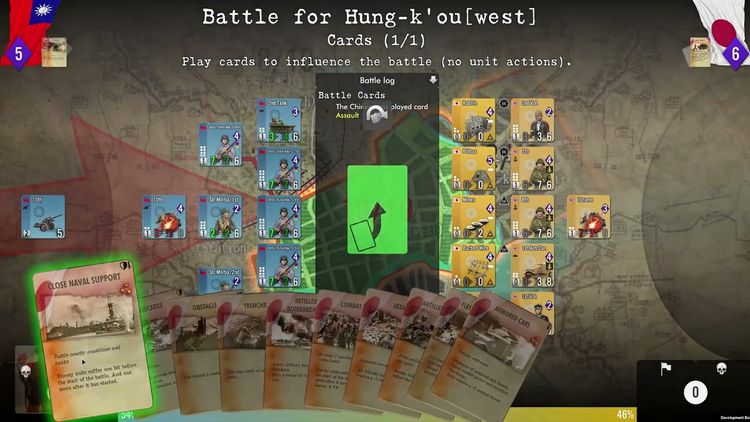
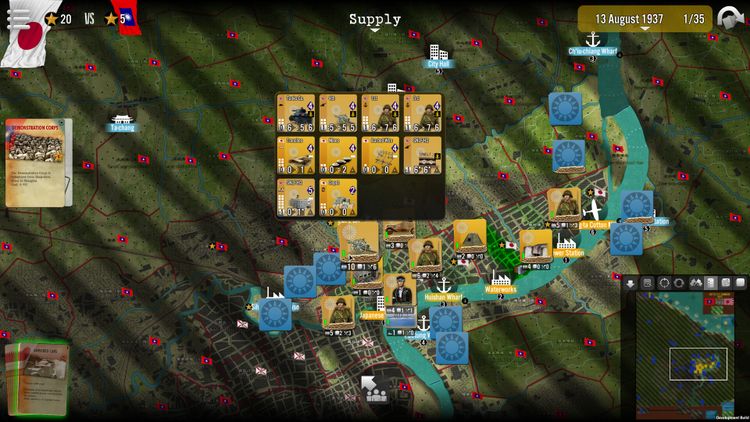
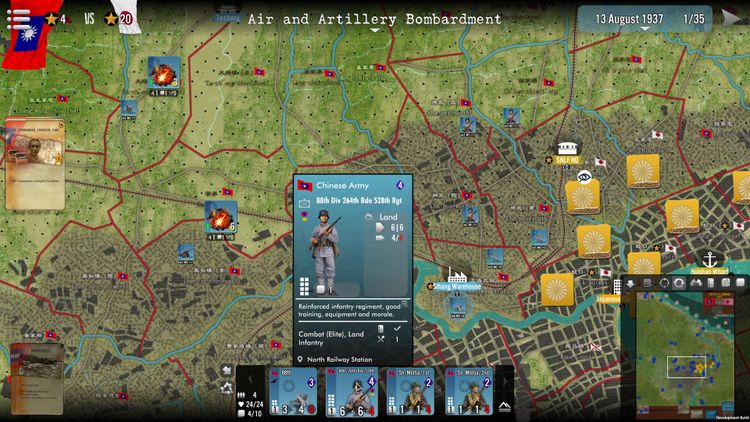
SGS Battle for Shanghai covers the period from August 13, 1937, to November 26, 1937, till the final Japanese capture of the city and the heavy destruction brought to the city. At the end of November, when the game ends, the Chinese have lost ground and are even now threatened at their capital of Nanking. But could manage to have them seize the initial enemy positions in Shanghai and hold them before the Japanese reinforcements and counter-offensive (from late August) strikes at you, thus complicating Tokyo’s plans and achieving your own, to draw worldwide attention to the conflict? Or, as the Japanese commander, can you hold your ground in the city and put the assaulting Chinese in an even more precarious situation than the historical one when your counter-offensive comes? Each quarter of city and nearby towns and suburbs will become the stake of a thousand battles.

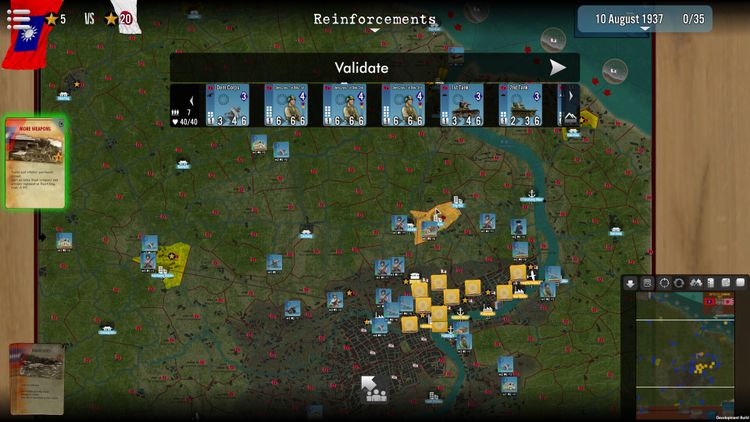
The game will contain a grand campaign scenario covering the battle from August until November, as well as other (intermediate or shorter - see below) scenarios based on different starting days or limited to specific areas (Shanghai city, the Yangze river banks, etc…) of the battle.
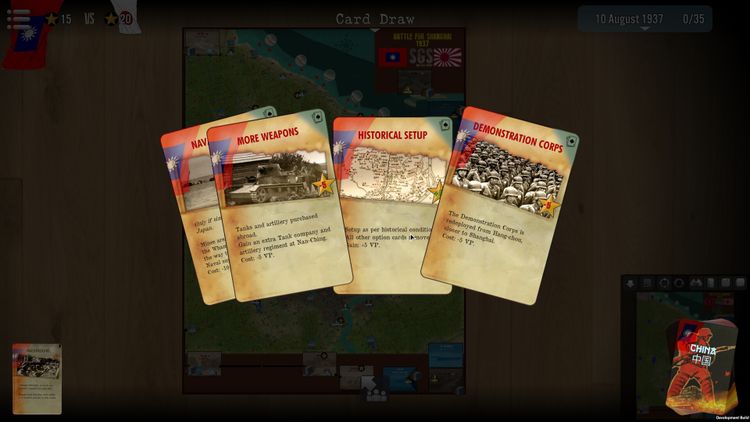
We plan to also provide the players with interesting options to explore potential what-if situations.
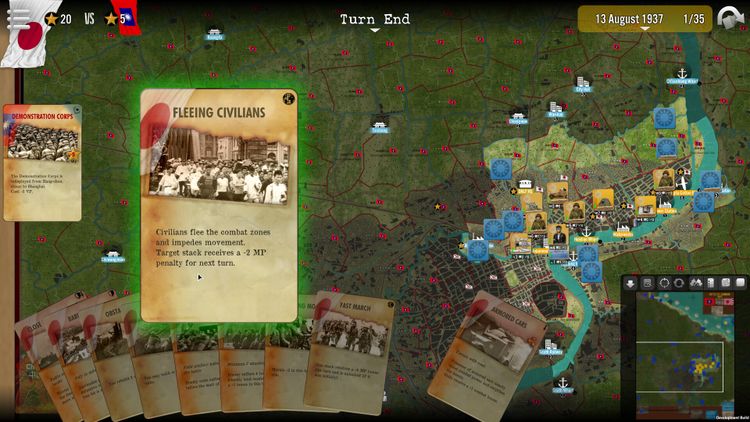
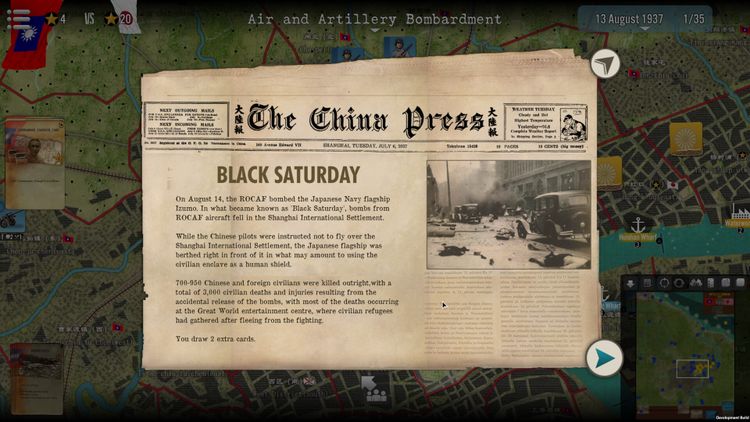
The player will also find in the game historical events.
Those can be strictly historical or random depending on their nature, and/or depending on the game setting (historical scenario or what if). A more efficient Chinese artillery? A better preparation for the defenders? A stronger implication of the navies on both sides? Or, on the contrary, a scenario where all external events occur at exactly the same time as in History.

Most events generate even more immersion, sticking to a historical reality. All are carefully designed, with extensive historical research, to go beyond the game, to bring its playful dimension closer to what could be a highly interactive history book.